


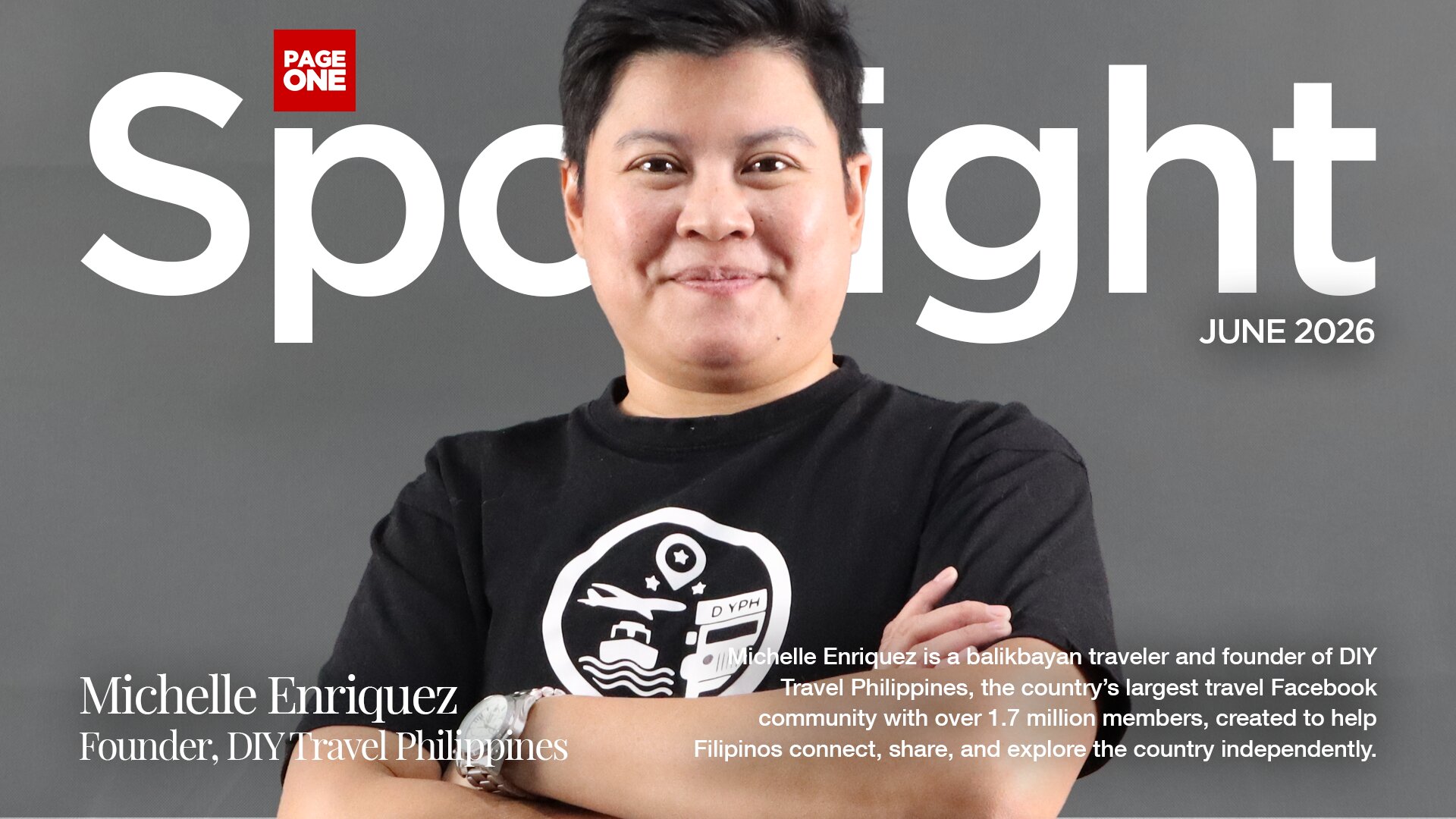






For most people, DIY Travel Philippines looks simple enough: a Facebook group where travelers exchange tips, ask questions, and share stories from the road.
Behind that appearance, however, is a decade of constant moderation, difficult decisions, and a commitment to protecting a culture that founder Michelle Enriquez says was never meant to become just another online audience.
What began as a space for travelers seeking practical information has grown into one of the country’s largest travel communities. But according to Michelle, growth was never the primary goal. Preserving trust was.
Building Structure As The Community Grew
In the early days, moderation was relatively straightforward.
Members could freely post questions, recommendations, travel invitations, and even promotions for travel-related services. As membership expanded, however, the volume and variety of content quickly became more difficult to manage.
“We started seeing all kinds of content that didn’t always align with the group’s original purpose,” Michelle explained.
Rather than restricting participation outright, the team created separate communities for related interests, including tours, content creation, buy-and-sell activities, and photo editing. The move allowed the main group to remain focused on travel discussions while giving members other spaces to engage.
As membership continued to climb, post approval became necessary.
Every submission would need to pass through moderators before appearing publicly. At one point, the queue surpassed a thousand pending posts.
What makes that even more remarkable is that DIY Travel Philippines has never operated like a traditional media company. Its administrators and moderators all have full-time jobs outside the community.
“Community management has always been something we handle during our free time,” Michelle said.
The challenge was never simply managing volume. It was preserving the culture that attracted people in the first place.
One Rule That Never Changed
For Michelle, there has always been one principle that outweighs everything else: respect.
“From day one, we’ve had one non-negotiable rule: respect.”
That philosophy extends beyond interactions between members. It applies to how travelers discuss destinations, local communities, service providers, and differing opinions.
Michelle said the rule carries personal significance. Having experienced disrespect herself, both online and offline, she wanted the community to be a space where people could participate without fear of ridicule or hostility.
The result is a moderation approach that focuses less on policing opinions and more on maintaining a respectful environment where members feel comfortable asking questions, sharing experiences, and helping one another.
As the community expanded, technology helped lighten some of the workload. In 2019, Michelle joined Facebook’s Community Partnerships program, gaining access to support, coaching, and community management tools.
Still, she believes no amount of automation can replace human judgment.
“At the end of the day, managing a community of this size comes down to consistency—protecting its culture and making sure members continue to find value in being part of it.”
Choosing Trust Over Easy Revenue
Few online communities reach more than a million members without aggressively pursuing monetization.
DIY Travel Philippines took a different route.
Michelle and co-admin Rachelle were never opposed to advertising or partnerships. In fact, they regularly received offers from travel agencies, hotels, tourism boards, and brands eager to reach the group’s audience.
The question was never whether to monetize.
“The challenge for us was never whether to monetize, but how to do it responsibly,” Michelle said.
Their standard remained surprisingly simple: Does it benefit members, and is it relevant to travel?
If the answer was yes, they were willing to explore it. If not, they often declined.
“We’ve turned down a lot of opportunities over the years—not because we’re against paid partnerships, but because we want to protect the trust that members have in the group.”
That same philosophy influenced another defining decision: keeping the community non-partisan.
Travelers arrive in the group with different backgrounds, beliefs, and opinions. Michelle believed the one thing connecting them was their shared interest in travel. Political discussions, therefore, were intentionally discouraged.
The goal was not to avoid difficult topics but to keep the focus on the reason people joined in the first place.
“Once a community starts to feel like every post is a sales pitch, it stops feeling like a community.”
Creating Opportunities For Others
Over the years, DIY Travel Philippines became an important discovery platform for Filipino travel bloggers, creators, entrepreneurs, and tour operators.
Many individuals who once participated as ordinary members eventually built substantial audiences of their own and established careers in travel content creation.
For some founders, watching others benefit commercially from a platform they built might create resentment. Michelle sees it differently.
“Seeing others succeed has never felt like something I missed out on.”
She credits much of their success to the work they invested in producing useful content and serving their audiences consistently.
For her, the reward has always been different.
“I’ve always found fulfillment in building communities and connecting people.”
That perspective helps explain why DIY Travel Philippines has often prioritized collective value over personal visibility.
A Travel Community During A Time When Nobody Could Travel
Perhaps no period tested the group’s purpose more than the COVID-19 pandemic.
By then, DIY Travel Philippines had surpassed one million members. Yet travel itself had effectively stopped.
Rather than becoming inactive, the community adapted.
Members began sharing photographs from previous trips, revisiting favorite destinations, and exchanging memories from journeys they hoped to take again someday.
During lockdowns, travel became less about movement and more about connection.
As restrictions gradually changed, the group evolved once more. Travelers used it to navigate constantly shifting requirements, transportation policies, and regulations. Firsthand experiences became valuable sources of information in an uncertain environment.
Looking back, Michelle does not believe the community lost its purpose during that period.
“It became a space where travelers could stay connected, support one another, and hold on to the hope that they would be able to travel again.”
Choosing What Is Right Over What Is Popular
For communities of this scale, some of the hardest decisions involve conflict.
One incident remains particularly memorable for Michelle.
A post about a travel business gained enormous attention inside the group. Soon, people who had never interacted with the business began leaving negative reviews online.
The situation raised uncomfortable questions about responsibility.
“It reminded us that with a community this large comes a responsibility to be fair.”
The experience reinforced a principle that continues to guide moderation today: DIY Travel Philippines does not want to become a platform for public shaming.
While members are encouraged to share legitimate experiences, the team is careful when approving accusations or labeling businesses as scammers without sufficient evidence.
When there is a documented pattern of complaints and clear proof, warnings are allowed. But when facts remain unclear, caution takes precedence.
“It may not always be the most popular decision, but we’d rather focus on being fair, factual, and responsible than fuel an online pile-on.”
That approach reveals something important about how DIY Travel Philippines operates.
The community may have been built around travel, but its success has depended on something far less glamorous: the steady, often invisible work of protecting trust.
For Michelle, that trust remains the group’s most valuable asset—and the one thing worth defending, no matter how large the community becomes.