


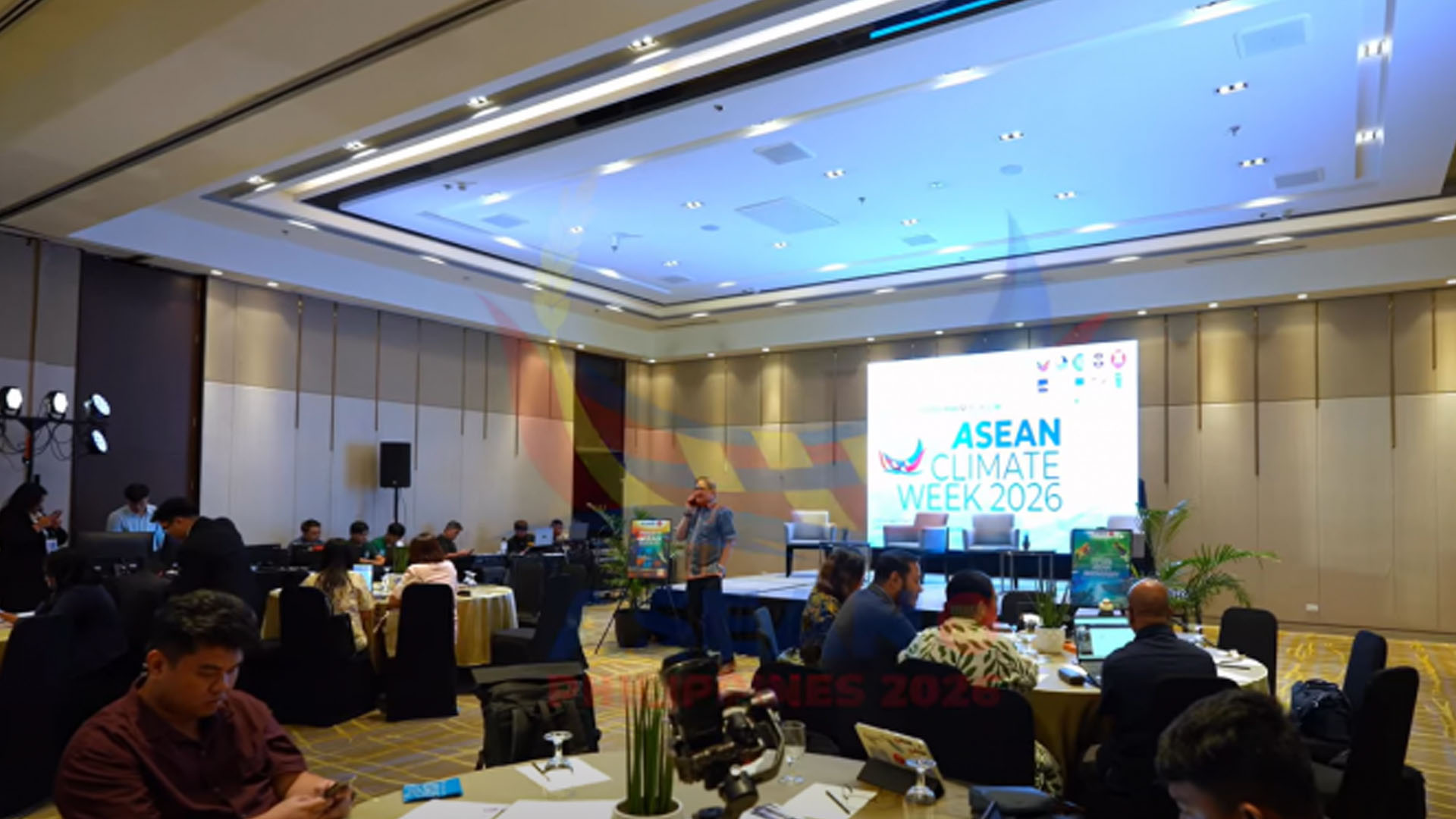








The Association of Southeast Asian Nations (ASEAN) is stepping up regional cooperation on loss and damage as member states seek stronger support systems for communities affected by climate change-related disasters across Southeast Asia.
In a news release Wednesday, Department of Environment and Natural Resources (DENR) Secretary Juan Miguel Cuna underscored the importance of prioritizing closer cooperation among member states, through the ASEAN Climate Week.
He said that as ASEAN chair this year, the Philippines is advancing closer and better cooperation on loss and damage as a key priority to help build a more resilient and responsive region amid increasing climate threats.
“Beyond mitigation and adaptation, countries must also prepare for the impacts that cannot be fully avoided, such as damage to homes, loss of livelihoods, and disruption to essential services following extreme weather events,” the DENR chief said.
At the opening of ASEAN Climate Week 2026 on Monday, DENR officials and concerned stakeholders noted that mitigation and adaptation efforts alone are no longer enough, stressing the need to prepare for climate impacts that cannot be fully prevented.
These include the destruction of homes, loss of income, and interruptions in essential services following extreme weather events.
Cuna said the regional bloc is prioritizing closer coordination, resource-sharing, and technical collaboration among member states, and developing clearer pathways for accessing international climate finance.
He added that regional efforts are also focused on improving climate risk management, expanding data-sharing systems, and developing clearer pathways for accessing international climate finance.
“What ASEAN is doing with regard to this is pushing for stronger coordination and collaboration among ASEAN member-states, and also pushing for the sharing of resources and technical expertise,” Cuna said.
“The Philippines, for its part, has initiated dialogue and studies through the ASEAN Working Group on Climate Change, and in fact, there’s a study on loss and damage in particular which aims to be able to assess the readiness of the different ASEAN states to deal with climate change, and in the process, identifying their specific needs so that these can be addressed,” he added.
The initiative, Cuna said, aims to improve disaster response systems, speed up assistance after typhoons and floods, expand access to rebuilding funds, and support recovery in the vulnerable sectors, including agriculture and fisheries. (PNA)