


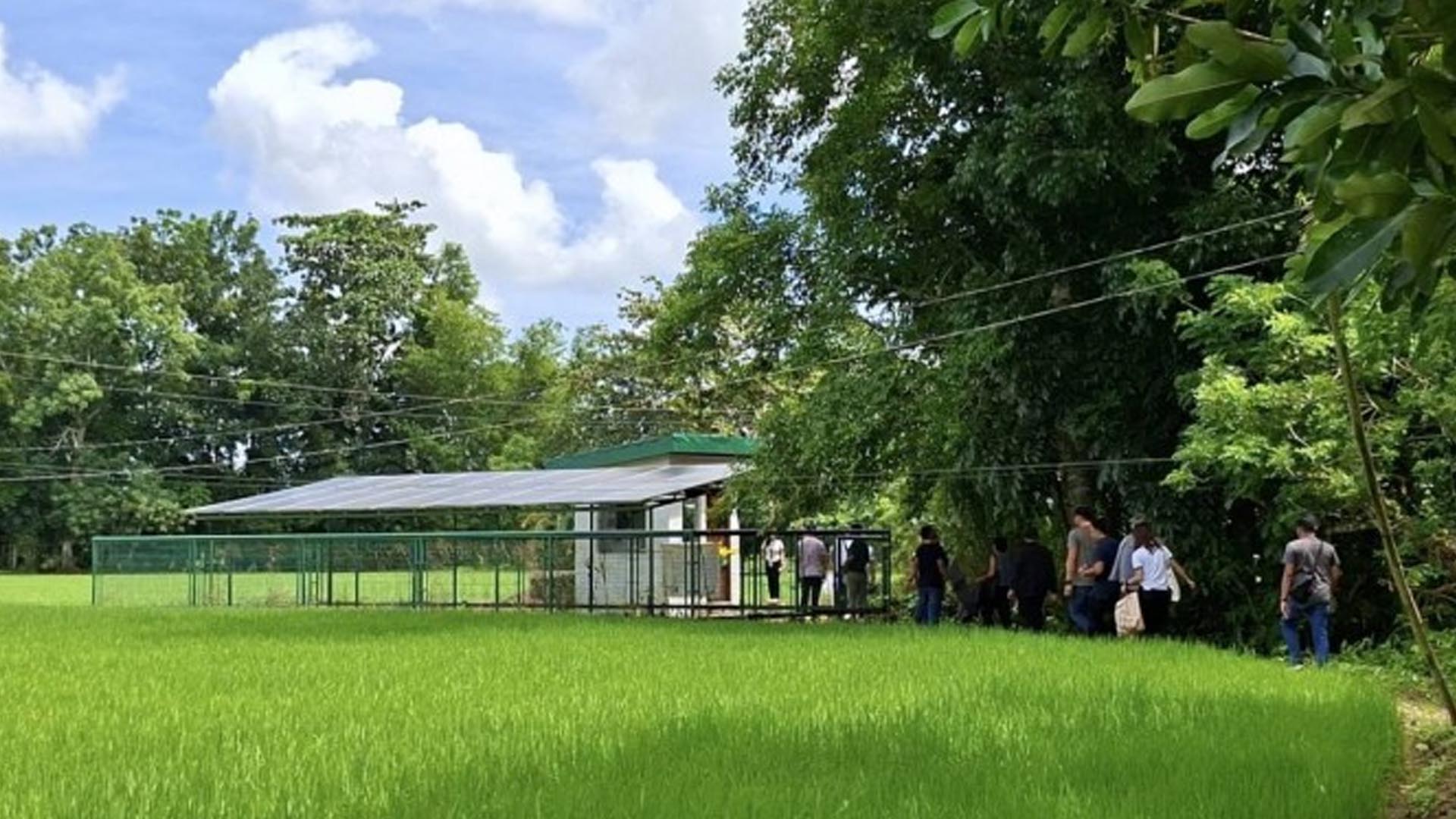








The Department of Agrarian Reform (DAR) on Wednesday said Capiz farmers could expect an increase in yield and a cut in production costs following the installation of a PHP7-million solar-powered irrigation system allowing them to farm year-round and reduce dependence on rain-fed agriculture.
In a news release on Wednesday, DAR said its Matagnop Solar-Powered Irrigation Project (SPIP), implemented with the National Irrigation Administration (NIA), has been supplying a stable water source to 30 hectares of farmland in the Matagnop-Agtambi-Malonoy Agrarian Reform Community (MAM ARC), since its turnover to the Matagnop Royale Multipurpose Cooperative (MPC) in Dao in November.
“This project is a concrete expression of the government’s commitment to empower our ARBs (agrarian reform beneficiaries). By ensuring reliable access to irrigation, we are giving our farmers the tools they need to increase their yields, improve their income, and sustain their livelihood,” Zenaida Andrada, DAR-Capiz OIC-Municipal Agrarian Reform Program Officer, said.
The DAR said the project, funded under the Comprehensive Agrarian Reform Program-Irrigation Component (CARP-IC), directly benefits 33 farmers, mostly agrarian reform beneficiaries or ARBs.
“The improved irrigation system is expected to increase crop yields, enable year-round farming, and help reduce poverty in the community,” DAR said.
The SPIP system includes deep well facilities, two solar-powered pumps, pump houses with perimeter fencing, a 932.30-meter bench flume, stilling pools, drainage crossings, and other structures designed to ensure efficient water delivery to farms.
The DAR said using renewable energy, the system lowers irrigation costs while ensuring consistent water access even during dry months, which would help enhance food production and strengthen the local agricultural economy. (PNA)