


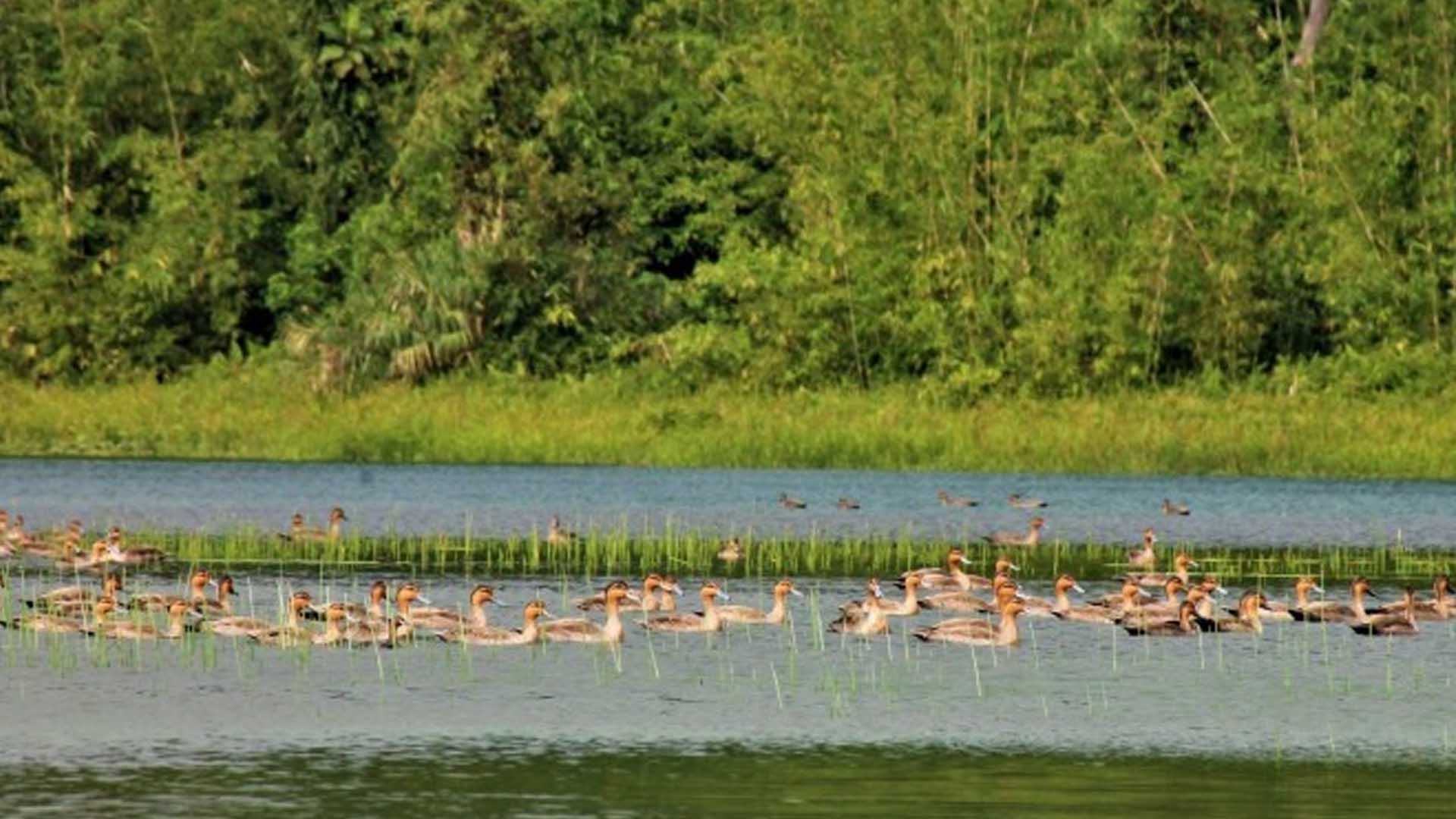








Preservation efforts have raised the population of wild ducks inside the Mahagnao Volcano Natural Park (MVNP), considered a safe natural habitat for this vulnerable species.
Based on their monitoring, the population of this duck increased to 2,000 last year from 1,000 in 2017, Burauen town tourism officer Carmela Corazon Crebillo said in an interview Wednesday.
“Their presence indicates that they found a home in Malagsum Lake. Over the years, we have been capacitating the community to help preserve these ducks,” Crebillo said.
Malagsum is one of the three lakes inside the MVNP. The lake, with its high sulfur content, is so named because of the sour taste of the water.
In 2019, a bird expert identified 28 species of birds in Mahagnao Lake and Malagsum Lake, including the Barred Rail, the Wandering Whistling Duck, the Philippine Duck, and the Cinnamon Bittern, Yoling and Brahminy Kite.
In Malagsum, the most dominant is the Philippine Duck, locally known as “gamaw.” It is a large dabbling duck endemic to the Philippines. It eats shrimp, fish, insects, and vegetation, and it frequents all types of wetlands.
The presence of ducks has been drawing the interest of bird watchers in Malagsum, a lake located just near a highway that links MVNP to the town center.
“It is an indication that the lake serves as a sanctuary for these water birds. Whether these birds are resting or foraging, the lake appears to be an important stop on their migratory route,” Crebillo added.
She said going near these ducks is prohibited so as not to disturb them in their natural habitat and sanctuary. Bird watching is being done using spotting scopes and a bird hide.
Recently, more ducks wandering the lake are more visible from the highway with just their bare eyes.
Elma Retostos, president of the MVNP ecotourism association, recalled that wild duck hunting used to be rampant in their village years ago.
“In the past few years, people here have become aware that it is illegal to hunt wild ducks. Our local authorities are very strict in enforcing the law,” Retostos told the Philippine News Agency.
The last hunting was documented in 2019, when authorities found a bird trap or snare and a dead wild duck.
Most of these wild ducks are migratory. They found homes within the lake over the years.
The Department of Environment and Natural Resources said migratory birds are major players in the ecosystem as they pollinate plants, disperse seeds, and consume insects and small mammals.
Hunting of wildlife, including birds, is illegal and punishable under the provisions of Republic Act 9147, or the Wildlife Resources Conservation and Protection Act.
Violators could face a maximum imprisonment of two years and one day to four years and a fine of PHP30,000 to PHP300,000. (PNA)